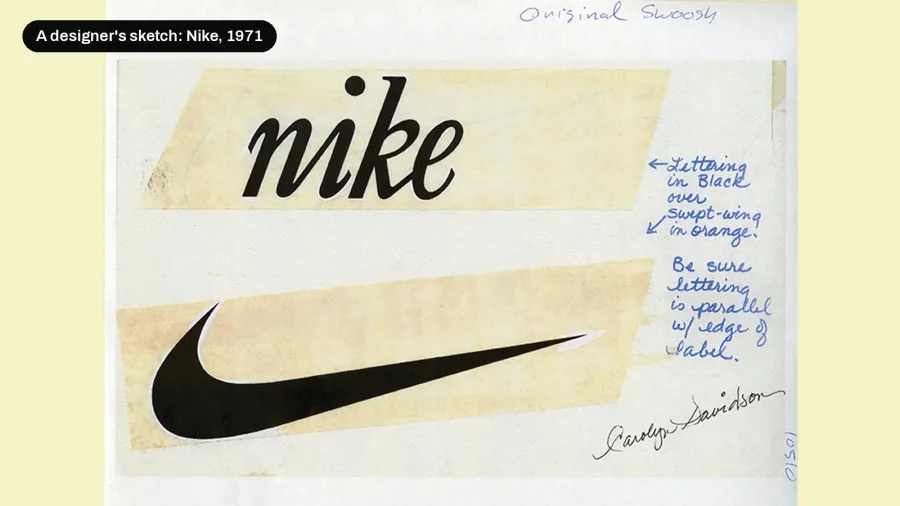
Type your business name into an AI logo generator and you'll have a dozen logos before your coffee cools. For a new business watching every dollar, that's hard to ignore. So is an AI logo good enough to build a brand on? We tested the tools, read the fine print and checked the latest copyright rulings to give you an honest answer.
The short version: an AI logo generator is a useful sketchpad, but a risky foundation for a business you plan to grow. Below, we explain why, show you what the tools really produce, and tell you when using one is perfectly fine.
What an AI Logo Generator Actually Does
Most tools fall into two groups. Template-based generators, such as Design.com, Looka and LogoAI, combine ready-made icons, fonts and layouts with your business name. Generative tools, such as ChatGPT, Gemini and Midjourney, create a brand-new image from your prompt.
Both are fast. Neither knows who your customers are, what your competitors look like, or why someone should choose you. To see the result for ourselves, we invented a business, Juniper Bakehouse, an artisan sourdough bakery and café, and gave it to two popular tools.
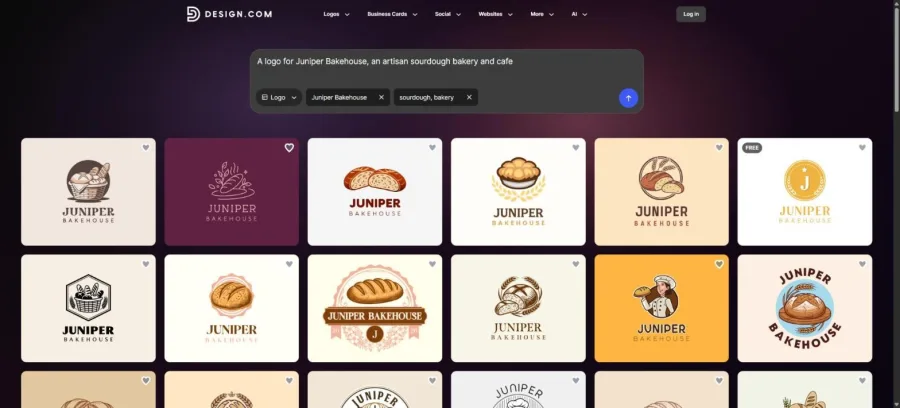
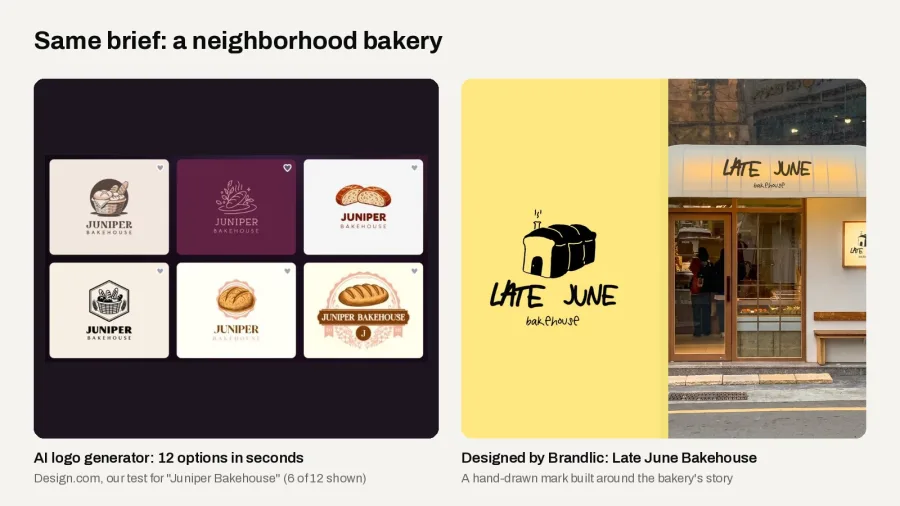
Design.com returned 12 options in seconds. Nearly every one used a loaf of bread or a wheat stalk above a serif name. They're tidy and they say "bakery", but they could belong to any bakery in any town.
Now compare them with Late June Bakehouse, a bakery identity we designed: a hand-drawn character instead of a stock loaf, and a mark no other bakery shares.
Where AI Logo Tools Genuinely Help
We don't think AI logo tools are useless. Used for the right job, they save time and money:
- Exploring directions: Seeing 20 rough ideas can help you decide what you like before you brief anyone.
- Side projects and one-off events: A weekend market stall or a school fundraiser rarely needs a full identity.
- Better briefs: Showing a designer "more like this, less like that" is often clearer than describing it.
- Testing an idea: If you're validating a product before launch, a placeholder logo is fine.
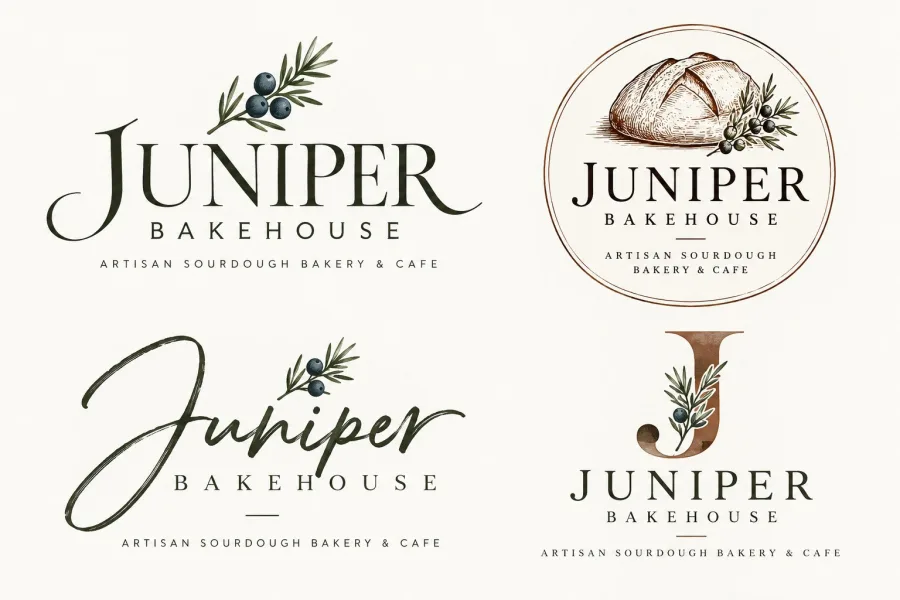
ChatGPT gave us four polished options that genuinely looked like a real bakery. Look closer, though, and all four are the same idea: a juniper sprig and a serif wordmark. They arrived as one flat image, not usable logo files, and one version cut off its own tagline.
The Problems Nobody Mentions
1. You may not own it
In the US, copyright needs a human author. In January 2025 the US Copyright Office confirmed that AI output can be protected only where a person determines the expressive elements, and that writing prompts alone isn't enough. In March 2026 the Supreme Court declined to hear Thaler v. Perlmutter, leaving the human-authorship rule in place.
Other markets are moving the same way. In the UK, the government's March 2026 report on copyright and AI proposed removing the special protection for computer-generated works. In Germany, a Munich court ruled in February 2026 that three AI-generated logos were not protected by copyright. In Australia, there's no copyright without a human author.
In practice, that means a competitor could copy an unedited AI logo and you may have little you can do about it.
This isn't legal advice. If ownership matters for your business, check with an intellectual property lawyer.
2. Someone else can have the same logo
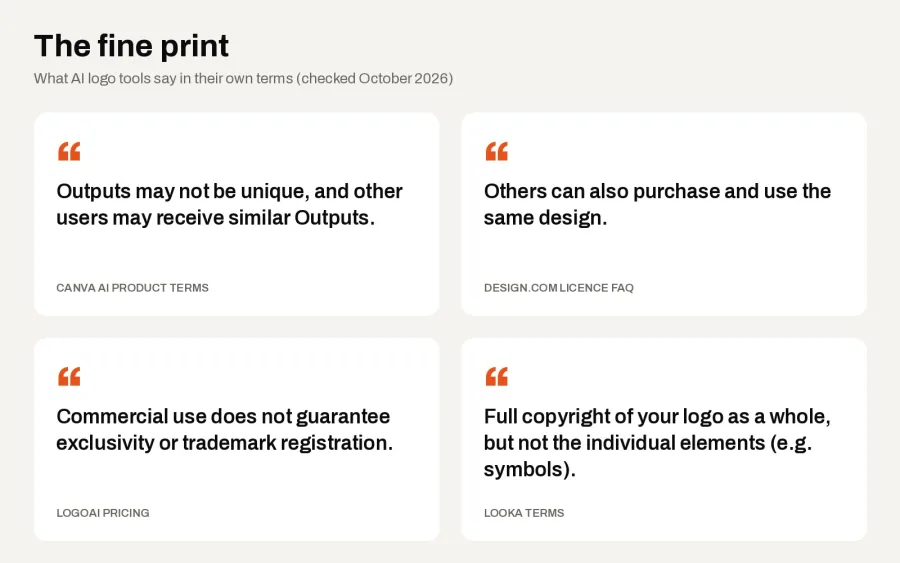
The tools say this themselves. Canva's AI terms state that outputs "may not be unique, and other users may receive similar Outputs." Design.com's standard licence is non-exclusive, so others can buy and use the same design. LogoAI's pricing page notes that commercial use "does not guarantee exclusivity or trademark registration."
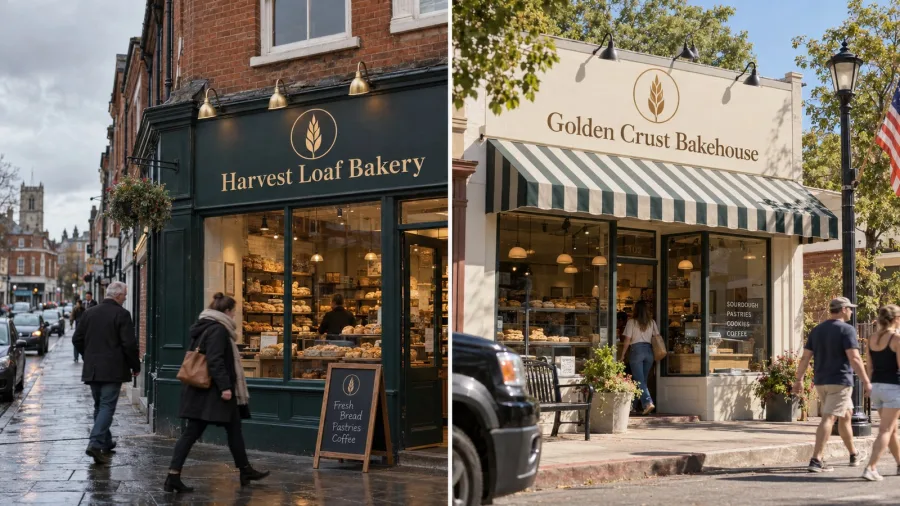
Picture two bakeries in different towns picking the same template. Both shop signs end up with the same wheat-in-a-circle logo, and neither one can stop the other from using it.
3. Trademarks get harder
A trademark protects the sign customers use to recognize your business, and nothing stops you applying to register an AI-made logo. The problem is what these logos are made of. Design.com warns that non-exclusive logos may not be eligible for trademark registration, and Canva's content licence doesn't allow its library elements, apart from fonts, to be used as part of a trademark. Generic icons and shared templates make a logo harder to register and easier to confuse with someone else's.
4. Lettering still trips AI up
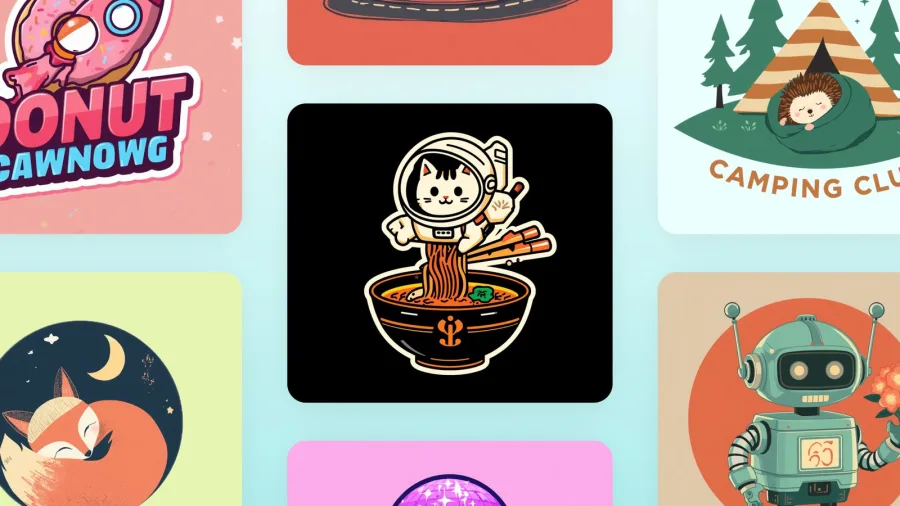
AI image tools have improved, but text remains a weak spot. Even Canva's own showcase for its AI logo generator features a donut logo with lettering that reads "CAWNOWG". In a logo, the name is the one thing that has to be perfect. Always check spelling, spacing and legibility at small sizes before you print anything.
5. You get a picture, not a system
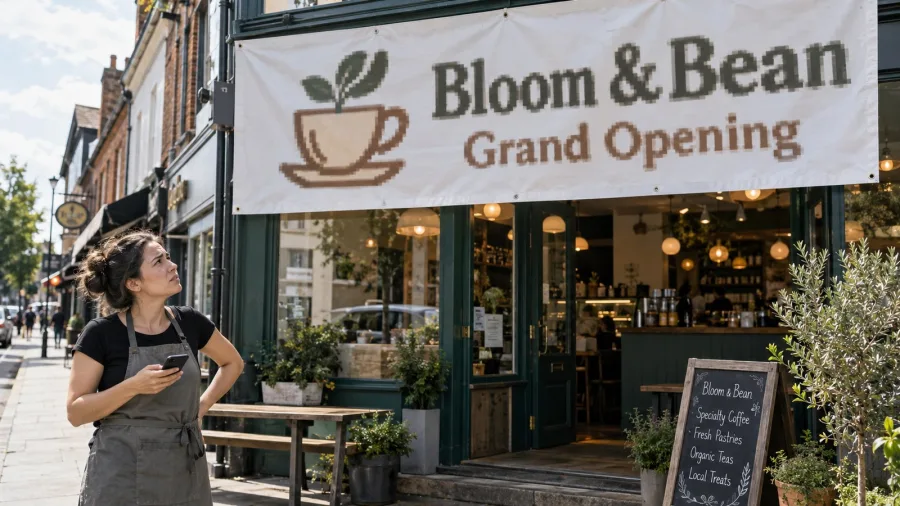
A logo has to work on a sign, a favicon, a social avatar and a printed box. That needs vector files, simplified versions and rules for color and spacing. Many tools charge extra for vector files: Looka's $35 basic package includes a single PNG, while its $72 package adds SVG and EPS. A generative tool like ChatGPT gives you a flat image you'll have to rebuild before you can print it properly. Skip that step and the first sign of trouble is often a blurry banner on opening day.
6. Customers notice, and some push back
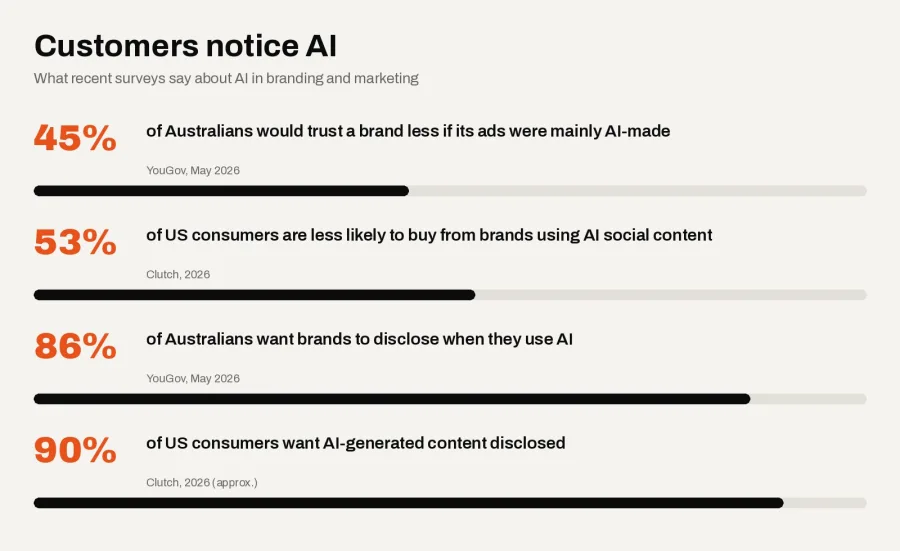
People are wary of brands that lean on AI. In a May 2026 YouGov survey, 45% of Australians said they would trust a brand less if its ads were mainly AI-made. In a 2026 Clutch survey of US consumers, 53% said they were less likely to buy from brands using AI-generated social content.
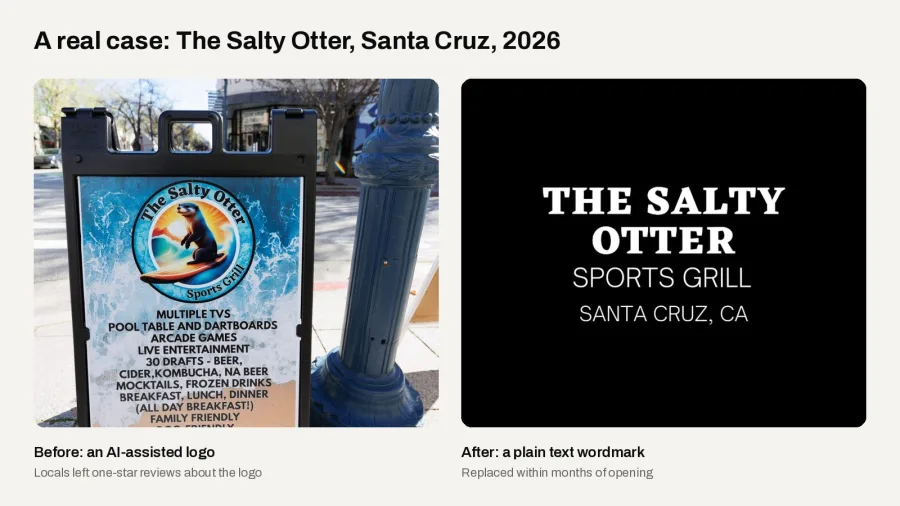
Small businesses feel it too. In early 2026, The Salty Otter in Santa Cruz, California, replaced its AI-assisted logo with a plain text wordmark after locals left one-star reviews saying the owner should have paid a local artist instead.
How a Designer Approaches the Same Brief
A designer starts with questions, not shapes. Who are your customers? Who are you competing with? What do you want people to feel when they see your name? Only then does drawing begin, usually with dozens of rough sketches, most of which are thrown away.
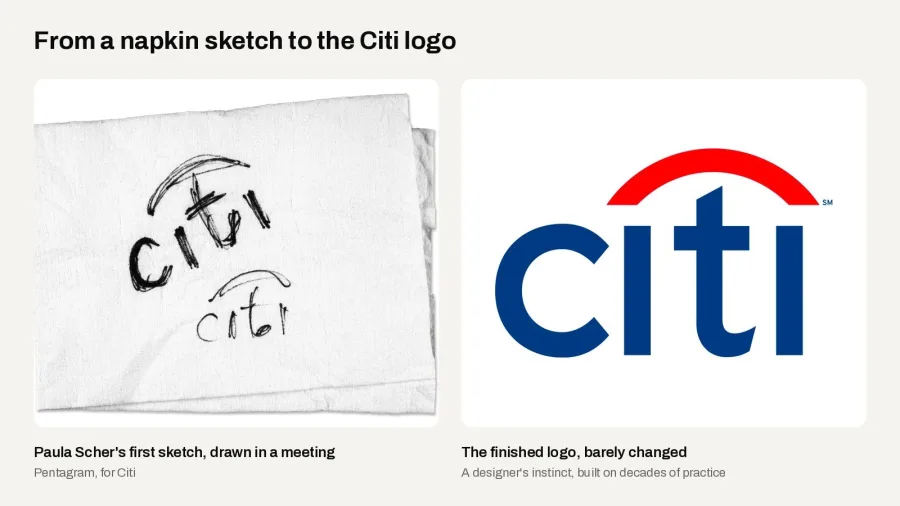
Experience is what makes those sketches count. Pentagram's Paula Scher famously drew the first idea for the Citi logo on a napkin during a meeting with the bank, and the finished mark barely changed. As she told Creative Bloq, she sketches, puts the idea away for a couple of days, then makes thumbnails and brings her team in to work them up.
The strongest ideas are refined, tested at tiny sizes and in one color, and built on a precise structure so they hold up everywhere. Our identity for Motiv shows the journey: early drafts with notes, distinct design routes, a mark built on a construction grid, and finally the brand out on the street.
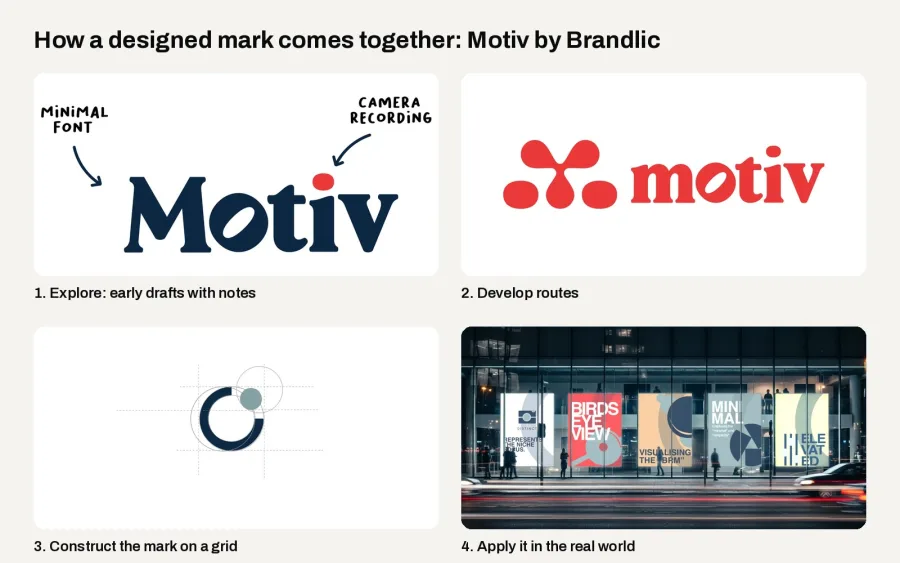
What a Branding Studio Gives You That an AI Logo Generator Can't
- Strategy: A clear position that explains why customers should choose you.
- A distinctive mark: Designed for your business, not assembled from a shared library.
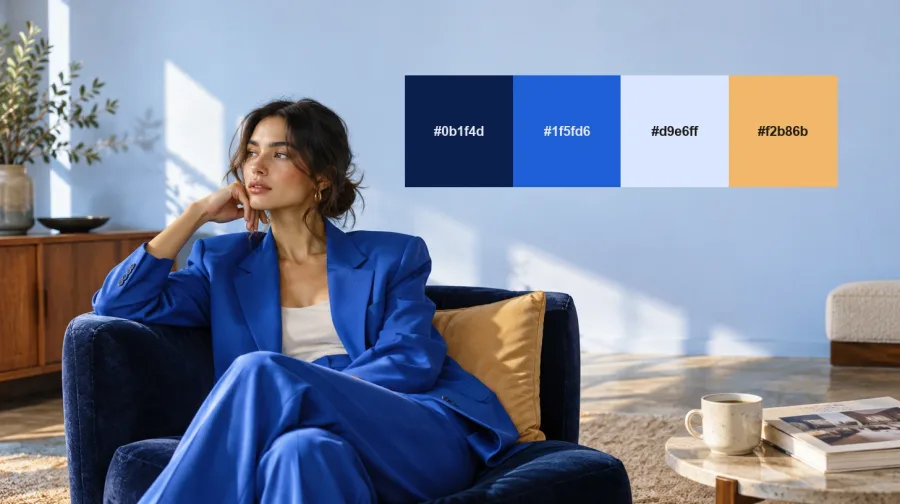
- A complete system: Logo variations, a color palette, typography and patterns that work together.
- Proper files: Vector files in every format you'll need for print, web and signage.
- Guidelines: Simple rules so everyone who touches your brand gets it right.
- Clear ownership: Rights in the final design transferred to you in writing.
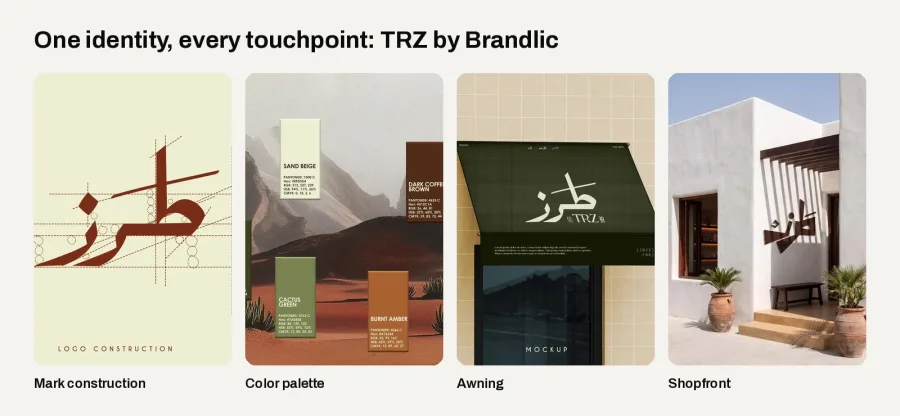
Our work for TRZ shows how one idea carries from a constructed mark to a color palette, an awning and a shopfront.
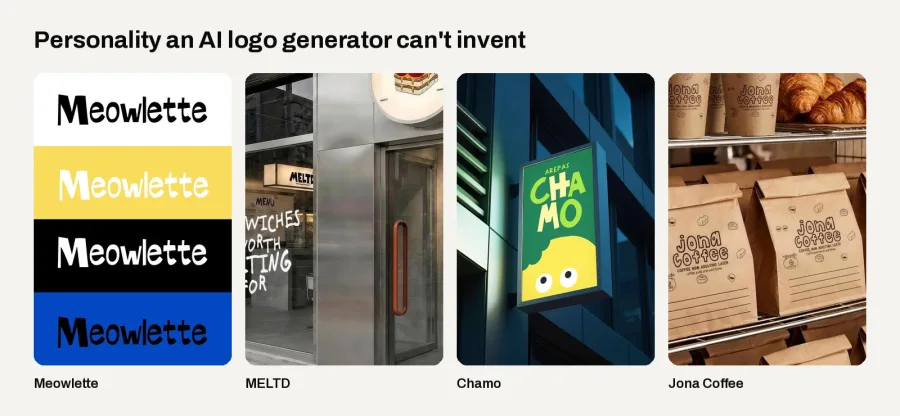
Just as important is personality. Meowlette, MELTD, Chamo and Jona Coffee each have a character you couldn't assemble from a shared template.
AI Logo Generator vs Designer: Side by Side
- Cost: AI tools cost $0 to around $200. A freelancer or studio typically costs from a few hundred to several thousand.
- Speed: AI takes minutes. A designed identity usually takes two to eight weeks.
- Uniqueness: AI logos are often non-exclusive and similar to others. Custom work is made for you alone.
- Ownership: Copyright in unedited AI output is uncertain. With a designer, rights are transferred in a contract.
- Files: AI tools often provide PNGs, with vectors at extra cost. A studio supplies a full file set.
- Strategy: An AI tool has none. A studio grounds every decision in research.
What Each Option Really Costs
AI logo tools are cheap upfront. Looka charges $35 for a basic logo and $72 for its premium package with vector files. Brandmark's one-off packages run from $35 to $195, and LogoAI works on a subscription of around $20 a month. Design.com charges extra for an exclusive licence, where one is available.
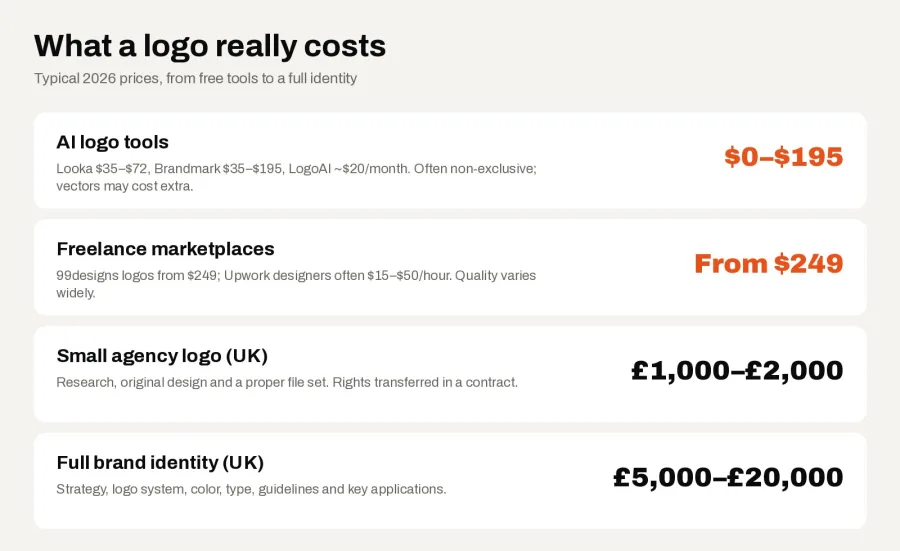
Professional design costs more but buys more. On 99designs, logo design starts at $249. On Upwork, many logo designers charge $15 to $50 an hour. In the UK, one 2026 pricing study puts a freelance logo at £500 to £1,000, a small agency at £1,000 to £2,000, and a full brand identity at £5,000 to £20,000.
The real comparison isn't AI versus designer today. It's a cheap logo now plus a rebrand in two years, versus doing it once properly. A rebrand later means new signage, packaging and website updates, plus the cost of rebuilding recognition you've already earned.
When an AI Logo Generator Is Fine, and When It Isn't
An AI logo generator is a reasonable choice for a hobby, a one-off event, an internal project or a quick test before launch. Bring in a designer when:
- You're raising investment or pitching to retailers.
- Your product needs packaging that has to sell on a shelf.
- You plan to register a trademark.
- You're expanding into new markets.
- You want to charge premium prices.
Already trading with a logo that isn't working? Our guide to the signals your business needs a rebrand will help you decide what to do next.
A Smart Middle Path
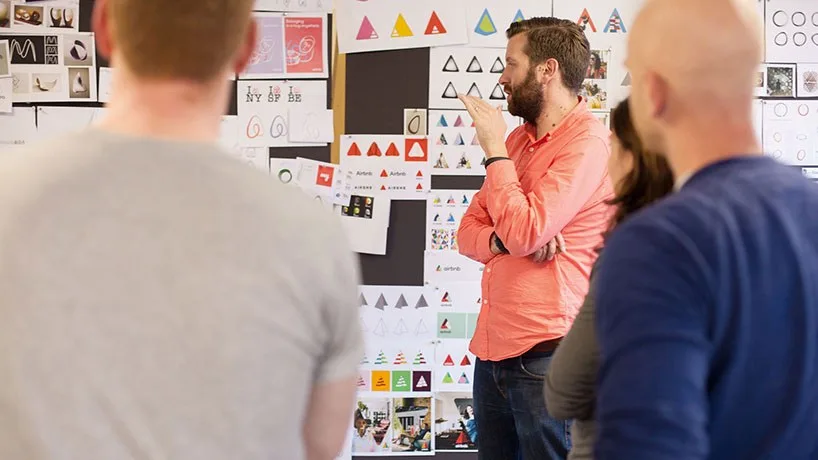
Good identities have always started with shared references. When DesignStudio created the Bélo symbol for Airbnb, its team spent weeks inside Airbnb, then reviewed loose sketches and mood boards with Airbnb's own team before anything was final.
You don't have to choose one or the other. If you've already been experimenting with AI tools, that's a good thing. Here's a simple way to get the best of both:
- Explore with AI: Generate a range of ideas and save the ones you react to, good or bad.
- Write down why: Note what you like about each one. Is it the warmth, the boldness, the simplicity?
- Brief a designer: Share the references and notes, plus your goals, customers and competitors.
- Let the designer build it properly: Original artwork, vector files, a system and clear ownership.
This saves time in the early stages and usually leads to a sharper brief, without leaving your brand built on a template anyone can buy.
Where AI Fits in a Good Design Process
AI isn't going away, and good studios use it where it helps: researching markets, gathering references and testing ideas quickly. The difference is that the final mark is drawn, refined and owned by people who understand your business.
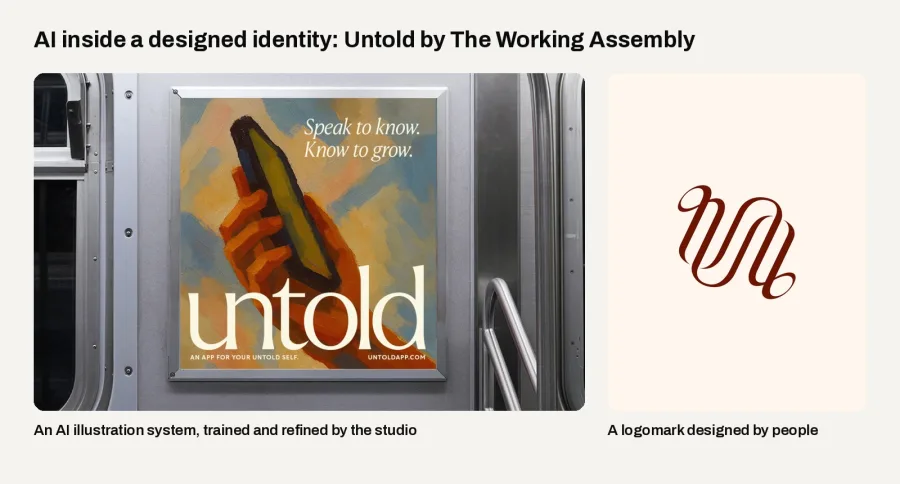
Some agencies are already finding a balance. For the voice-journaling app Untold, New York studio The Working Assembly built an AI illustration system that its team trained and refined, while the logomark itself was designed by people. Creative Boom questioned whether that was the right call, which shows how live this debate is.
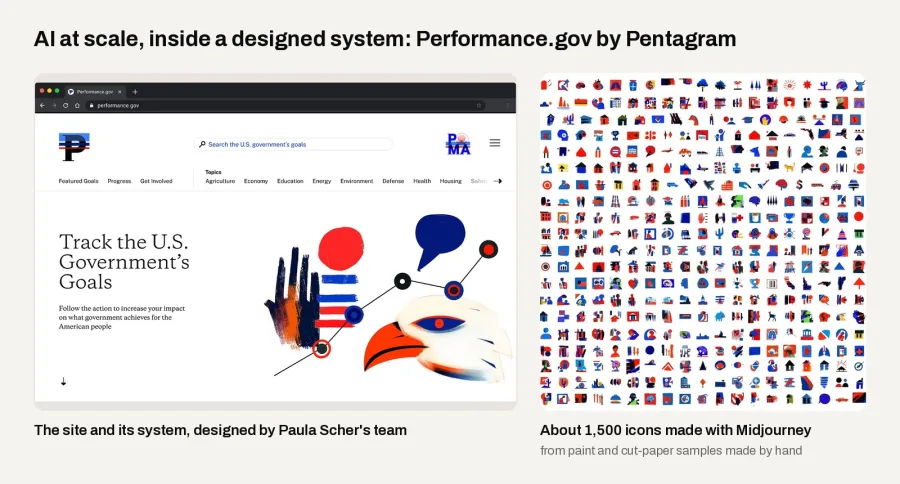
Pentagram took a similar line on Performance.gov, the US government's site for tracking federal goals, in 2024. Paula Scher's team made paint and cut-paper samples by hand, then used Midjourney to produce about 1,500 icons in that style. Scher said drawing that many by hand in the time available wasn't realistic, and the project still drew strong criticism from illustrators.
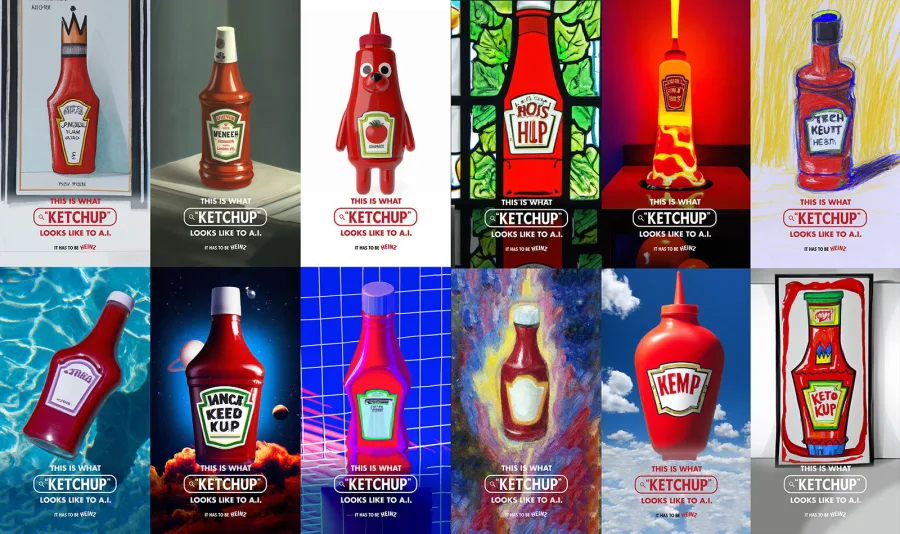
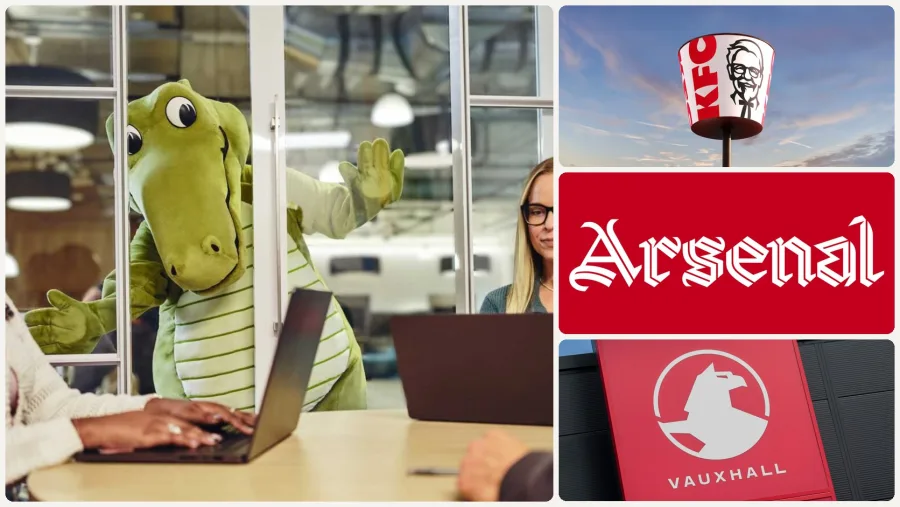
AI also shows why owning a recognizable look matters. When Heinz and the agency Rethink asked the image generator DALL·E 2 to draw "ketchup" in 2022, it kept producing bottles that looked like Heinz. The brand turned the results into its A.I. Ketchup campaign. A distinctive identity is something even a machine recognizes. A generic AI logo gives you nothing to own.
Frequently Asked Questions
Are AI-generated logos copyrighted?
Usually not on their own. In the US, a logo needs meaningful human authorship to be protected, and prompts alone don't count. The UK and EU are moving in a similar direction, and Australia requires a human author.
Can I trademark a logo made with an AI logo generator?
You can apply, but it may be harder. Non-exclusive templates and generic icons can make a logo difficult to register or easy to confuse with someone else's. Some tools' terms also limit trademark use.
Is Canva's AI logo generator free for commercial use?
You can use Canva designs commercially, but Canva's terms say AI outputs may not be unique, and its content licence doesn't allow library elements, apart from fonts, to be used as part of a trademark.
What is the best AI logo generator?
It depends on what you need. For quick ideas, a generative tool like ChatGPT is flexible. For ready-to-use files, template tools like Looka or Brandmark include vector downloads in their paid packages. Whichever you choose, read the licence: check whether the design is exclusive and whether you can register it as a trademark.
Will AI replace logo designers?
AI will replace some quick, low-budget logo work. It won't replace the strategy, judgment and craft that turn a logo into a brand people remember.
How much does a professional logo cost?
It depends on scope. Freelance logos often start at a few hundred dollars, while a full brand identity from a studio usually costs several thousand.
Final Thoughts
An AI logo generator is a handy starting point and a poor finishing line. If your business is a side project, it may be all you need. If you're building something to last, a designed identity will pay for itself in recognition, trust and legal peace of mind.
Want to see what designed identities look like in practice? Browse our recent work.
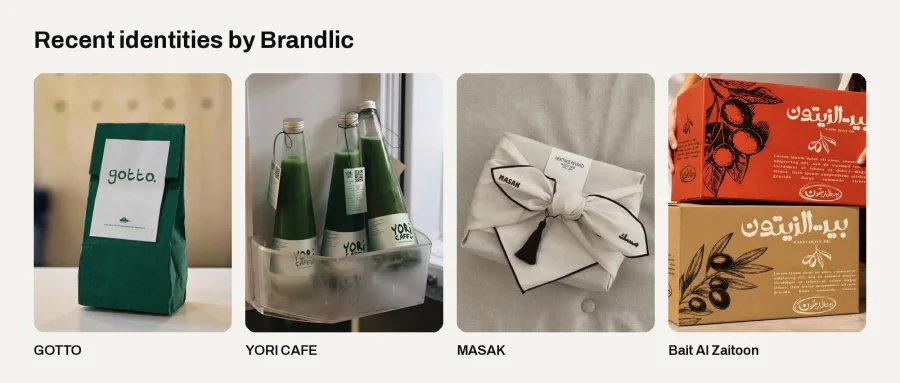
Thinking about your own brand? Talk to Brandlic about turning your idea into an identity that's truly yours.
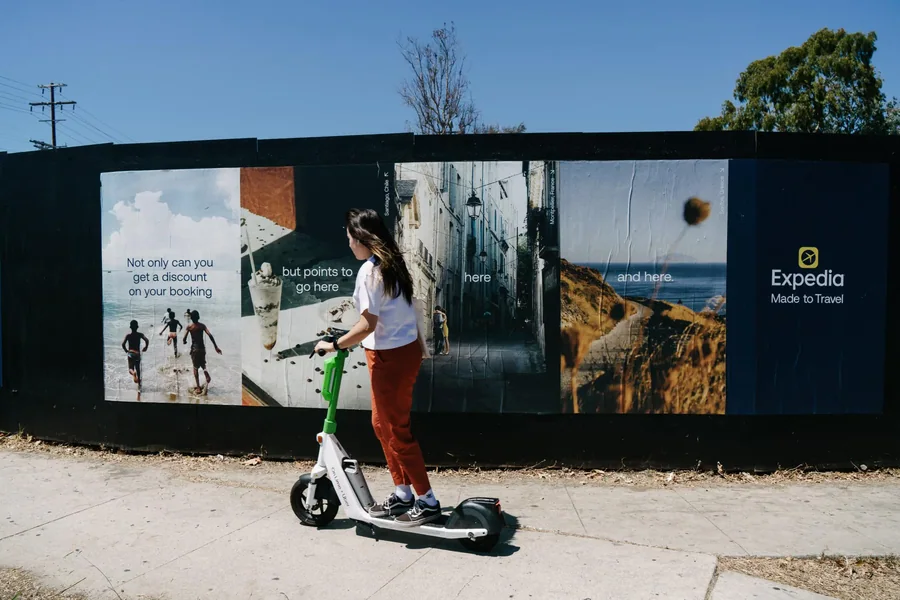
Our cover image and the two illustrative street scenes were created with AI. The AI logo test screenshots were captured on October 16, 2026.
Looking for expert support in branding, design, or packaging? Discover how Brandlic turns creative ideas into powerful brand experiences.
Explore our services →
Comments
Leave a reply
Your email address will not be published. Required fields are marked *